Bayside Lakes: the 1990s master-planned community on Palm Bay's southern edge
Bayside Lakes is the master-planned residential development that anchors Palm Bay's southern flank along Malabar Road and Babcock Street. It opened in the late 1990s, departs from the GDC-era platting pattern, and represents the first major non-GDC build-out inside Palm Bay's city limits.
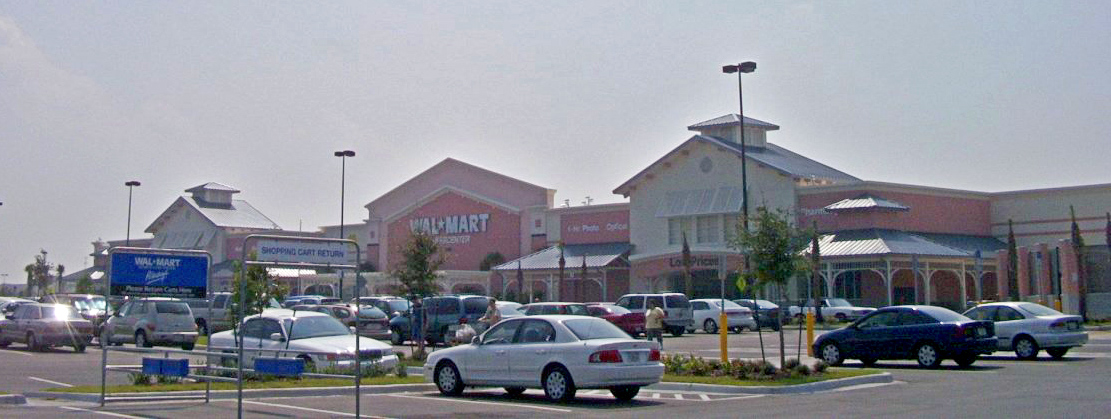
Bayside Lakes occupies a substantial parcel south of Malabar Road, west of Babcock Street, in southern Palm Bay. The development came online in the late 1990s and into the 2000s as a master-planned community with a different design philosophy than the GDC-era subdivisions that dominate the rest of the city.
Bayside Lakes matters in Palm Bay’s history because it represents the first major break with the GDC-era platting pattern. Where GDC’s subdivisions are rectilinear grids of quarter-acre lots, Bayside Lakes uses curvilinear streets, varied lot sizes, internal water features, deed restrictions, and homeowner association governance. The result is a different feeling neighborhood with different price points than most of pre-1990 Palm Bay.
The original development plan
The site was acquired and planned in the early-to-mid 1990s by various development entities, eventually consolidating around a master plan that envisioned several thousand residential units across multiple product types, recreational amenities, internal lakes (the namesake feature), and supporting commercial development.
Built phases included single-family detached homes at various price points, attached townhomes, and a small commercial center. The first units were available in the late 1990s. Construction continued through the 2000s, with various national homebuilders, including Lennar, KB Home, and others, building out specific village sections.
What’s different from GDC
GDC subdivisions in Palm Bay are characterized by long straight streets in rectilinear patterns, uniform lot sizes (typically 1/4 acre), modest setbacks, no internal amenities beyond what individual builders provided, and no HOA governance except in a few late-GDC subdivisions.
Bayside Lakes uses a different pattern. Streets curve. Lot sizes vary within and across villages. Setbacks are larger. There are internal lakes, walking paths, recreation amenities, and a community pool. Deed restrictions enforced through an HOA cover exterior modifications, landscaping standards, and various lifestyle constraints typical of modern master-planned communities.
The aesthetic and functional differences produce a community that feels distinctly different from older Palm Bay. Bayside Lakes residents are, on average, somewhat higher-income than the citywide median. The housing stock is newer and larger. The street pattern is harder to navigate by car for non-residents because the curvilinear design intentionally discourages cut-through traffic.
The economics
Master-planned communities in late-1990s Florida were a national trend. Developers had figured out that the price premium associated with curvilinear streets, internal amenities, HOA governance, and architectural controls could be substantial. A buyer paying $200,000 for a Bayside Lakes home in 2002 was paying a premium over what an equivalent-square-footage home in a 1980s GDC subdivision would have cost; that premium funded the developer’s amenity package and the longer build cycle.
The HOA dues fund ongoing operation of the amenities, maintenance of common areas, and enforcement of deed restrictions. Dues in Bayside Lakes are in the typical Florida master-planned-community range, not low but not extreme.
The buildout
Bayside Lakes’ phased construction continued through the 2000s. The 2008 financial crisis affected the development’s pace, as it affected all Florida residential development. Some planned phases were delayed, restructured, or sold to different builders. By the mid-2010s, most of the original master plan had been built out.
The current Bayside Lakes is a mature community. The trees have grown in. The amenities are operational. The HOA is well-established. The community’s housing stock is now 15-25 years old; some units have changed hands two or three times, and the resale market for Bayside Lakes homes is established.
Why it mattered for the city
Bayside Lakes was Palm Bay’s first signal that the city’s growth model could extend beyond the GDC inheritance. The development demonstrated that:
A modern Florida builder could acquire a substantial Palm Bay parcel (not GDC-platted), entitle it through the city’s planning process, and build out a master-planned community at scale.
There was buyer demand in Palm Bay for a more expensive, more amenity-rich housing product than the GDC-era inventory offered.
The city’s planning and infrastructure systems could accommodate the curvilinear, larger-lot, internally-amenitied form factor in addition to the GDC-era rectilinear grid.
After Bayside Lakes, other master-planned and semi-planned communities followed in Palm Bay, with various scales of ambition. None of them reached Bayside Lakes’ size or completeness, but the precedent had been set.
The contrast across the city
A driver moving from the old eastern Palm Bay neighborhoods east of U.S. 1 to Bayside Lakes in the southwest traverses three Palm Bays in twenty minutes. The east is the pre-1959 Tillman footprint, oldest housing, smallest lots, narrowest streets. The middle is GDC platting from the 1960s and 1970s, regular grids, modest homes on quarter-acre lots, mature trees where they’ve survived. The southwest at Bayside Lakes is 1990s-2000s master-planned, larger homes on larger lots with internal amenities and HOA controls.
The three Palm Bays represent three eras of American suburban development. They’re contiguous within a single city, easily compared, and they look genuinely different. Anyone trying to understand how American suburban development changed between 1959 and 2010 could get a meaningful sample by driving across Palm Bay.
The post-GDC opening
Bayside Lakes’ arrival in the late 1990s wasn’t accidental. General Development Corporation filed for Chapter 11 bankruptcy in April 1990 after federal mail fraud charges connected to fraudulent home sales. The company that had platted most of modern Palm Bay was suddenly gone. Its successor, Atlantic Gulf Communities, took over GDC’s remaining undeveloped inventory and operated as a much smaller residential builder through the 1990s before itself entering bankruptcy in 2001.
For Palm Bay this meant the platting-and-marketing machine that had defined the city’s growth model for thirty years no longer existed. The GDC street grid was in the ground. The unsold inventory was being worked off by Atlantic Gulf and by smaller builders buying individual lots. But large-scale assembled-parcel development was now a wide-open opportunity. A 1990s developer who could acquire a contiguous parcel south or west of the existing city footprint, entitle it through Palm Bay’s planning department, and finance the buildout had no major competitor.
That opening is what Bayside Lakes filled. The developer assembled a substantial parcel south of Malabar Road in territory that had not been platted by GDC, brought a master-plan PUD application through the city, and started construction in the late 1990s as the post-GDC inventory absorption was clearing. The timing matched the national mid-1990s housing recovery and the Florida buildout cycle that ran from roughly 1995 through 2006.
The pattern Bayside Lakes set, assembled non-GDC parcel + PUD entitlement + master-planned amenities + HOA governance, became the template for nearly every significant Palm Bay development that followed. The 1991 GDC collapse closed one growth era. Bayside Lakes opened the next.
What’s still building
Current development in Palm Bay continues both patterns. GDC-platted lots in older subdivisions continue to be built on at scale, mostly by national homebuilders producing entry-level new construction on the existing rectilinear lots. Master-planned-style developments on assembled parcels continue at smaller scales than Bayside Lakes; some of the recent new communities use HOA governance and curvilinear streets but are smaller in total unit count.
The mix is roughly half-and-half. About half of new Palm Bay construction is conventional GDC-lot infill. About half is master-planned or pseudo-master-planned. The buyer mix for the two types is somewhat different; the GDC-lot infill draws more first-time buyers and rental investors, the master-planned communities draw more move-up buyers.
The legacy
Bayside Lakes won’t be the last master-planned community in Palm Bay. Several smaller ones are in active development. The city’s planning department continues to accept and approve PUD (planned-unit-development) applications for assembled parcels.
But Bayside Lakes was the first, and it was the largest. It established that Palm Bay’s growth narrative could include something other than GDC’s inheritance. It demonstrated that the city had buyer demand for a more expensive product than the historic norm. It set a template that subsequent developers have referenced.
The development’s residents, mostly working professionals and families, anchor a substantial chunk of Palm Bay’s middle-income population. The community’s amenities, lakes, walking paths, pool, get steady use. The HOA continues to operate. The houses continue to change hands. Bayside Lakes is now just another Palm Bay neighborhood, distinctive in its design but settled into the city’s fabric the way any twenty-year-old neighborhood eventually does.
Further Reading
As an Amazon Associate we earn from qualifying purchases.