GDC's sales-by-mail era, 1960s through 1980s
General Development Corporation sold tens of thousands of Palm Bay lots to out-of-state buyers who never visited the property. The pitch was $10 down, $10 a month, a quarter-acre of Florida. The reality, for many buyers, was a lot they could never resell, on a street that would never get utilities, owned through a contract that gave them almost no equity until the final payment cleared.
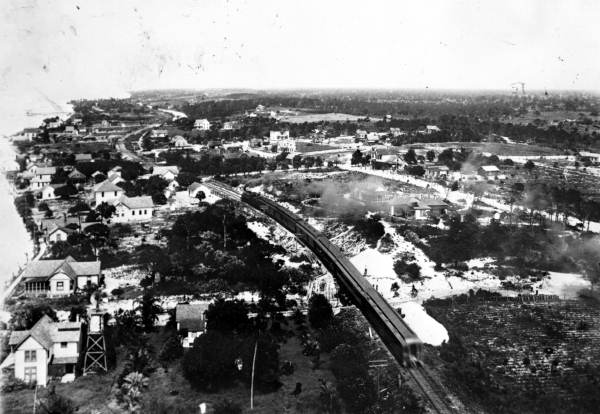
The pitch was simple. $10 down, $10 a month, ten years, and a Florida lot was yours. General Development Corporation ran some version of that pitch from roughly 1959 through the late 1980s, selling Palm Bay lots to buyers in every state east of the Mississippi and into the West. At its peak, GDC had over 200,000 active installment contracts on its books across its various Florida properties.
Most of those buyers never visited the property they were buying. Many never built. A meaningful percentage discovered, somewhere in the back end of their 120-month payment schedule, that the lot was worth substantially less than they had paid for it.
The mechanics of the sale
A typical GDC sale in the 1965-1985 period worked like this. A prospective buyer encountered the company through a magazine advertisement, a direct mail piece, or a sales presentation at a hotel ballroom in a city like Cleveland, Pittsburgh, or Buffalo. The materials emphasized Florida, retirement, sunshine, and the planned community character of GDC’s subdivisions. They de-emphasized the structural details of what was actually being sold.
If interested, the buyer signed an installment contract. The contract typically obligated the buyer to make monthly payments for a specified term, often 10 years, totaling some multiple of the lot’s market value, depending on interest rates and contract terms.
Important: the buyer did not receive a deed at signing. The buyer received a contract for deed, sometimes called a land contract or installment sale contract. Under this instrument, the buyer obtained the right to receive a deed once the full purchase price was paid, but the underlying ownership remained with GDC until that point.
If the buyer missed payments, the contract typically allowed GDC to declare default, retain all payments made to date as liquidated damages, and resell the lot. Equity built up over years of payments could evaporate over a few missed months. The instrument was, in financial-product terms, closer to a rental-purchase agreement than to a mortgage.
Why this model was profitable
GDC could sell the same lot multiple times. If a buyer defaulted, the company kept all prior payments, took back the lot, and could resell it to the next buyer at whatever market rate was available, often higher than the original price. The financial filings from this period show GDC reporting substantial revenue from forfeiture income.
The company also generated significant interest income. The installment contracts carried interest rates that exceeded prevailing residential mortgage rates. Across hundreds of thousands of contracts, that interest stream was a meaningful corporate revenue line.
And GDC sold the lots for prices well above the underlying land cost. The company had acquired its Palm Bay tract for roughly $40 per acre. A quarter-acre lot sold for $1,500 represented an effective price of $6,000 per acre, before counting drainage, road, and platting costs that GDC capitalized. Even after costs, the gross margin on a sold lot was substantial.
What buyers didn’t understand
A buyer who didn’t read the contract carefully (and many didn’t, the contracts were long and dense) was likely to misunderstand several things:
The amenities promised in marketing materials were not contractually binding. Brochures showed planned schools, community centers, recreation facilities, shopping. The contracts did not obligate GDC to build any of those things on any particular timeline, or at all.
The lot did not automatically include utilities. Water, sewer, electricity, paved roads, none of those were guaranteed to be in place when title transferred. Many buyers ended up with deeds to lots that had no road frontage, no water service, and no realistic path to development without substantial private investment.
The secondary market for the lots was much thinner than the primary market suggested. GDC was selling lots at retail; the only way a buyer could realize cash from the lot was to find another retail buyer, which was difficult outside GDC’s own sales channels. Effectively, the buyer was illiquid for the life of the contract.
The appraised value of the lots, in the resale market, was frequently below the purchase price the buyer had paid. A buyer who completed all payments often discovered the lot was worth $500-800 on the open market, not the $1,500-2,500 they had paid in.
The federal response
Congress passed the Interstate Land Sales Full Disclosure Act in 1968, requiring developers selling lots across state lines to register with the federal government and to provide buyers with property reports disclosing the actual condition of the development, the contractual terms, and the risks. The Act was a direct response to abuses in the land sales industry, of which GDC’s practices were a prominent example.
After 1968, GDC operated under the Act’s disclosure regime. The required property reports did include the disclaimers about amenities and resale markets that buyers had often missed in earlier years. Whether buyers actually read the reports before signing contracts is a different question; the Act’s enforcement mechanism was primarily disclosure rather than substantive regulation of contract terms.
GAO reports through the 1970s continued to find systematic problems with installment land sales, including GDC’s. The Federal Trade Commission opened multiple inquiries into the company’s marketing practices. Class-action lawsuits were filed by groups of buyers in multiple jurisdictions.
The 1990 criminal indictment
The criminal exposure came in 1990. The U.S. Attorney for the Southern District of Florida charged three GDC executives, the company’s CEO and two other senior officers, with fraud. The case, U.S. v. General Development Corporation et al. (90-Cr-6027), alleged that the executives had knowingly misrepresented the value of GDC’s lots to homebuyers through a separate financing program GDC operated.
The specific scheme involved GDC’s “Custom Homes” program, where buyers could purchase a GDC lot together with a house to be built on it. The indictment alleged that GDC was selling these house-and-lot packages at prices that incorporated inflated appraisals of the underlying lots, with the inflated appraisals used to support financing that the buyers could not actually carry on the underlying real economics.
The executives pleaded guilty in 1990 and received prison sentences. The plea agreements were extensively reported in the Miami Herald and the national business press at the time. The criminal case was, in practical terms, the end of GDC as a coherent business.
What the legacy looks like
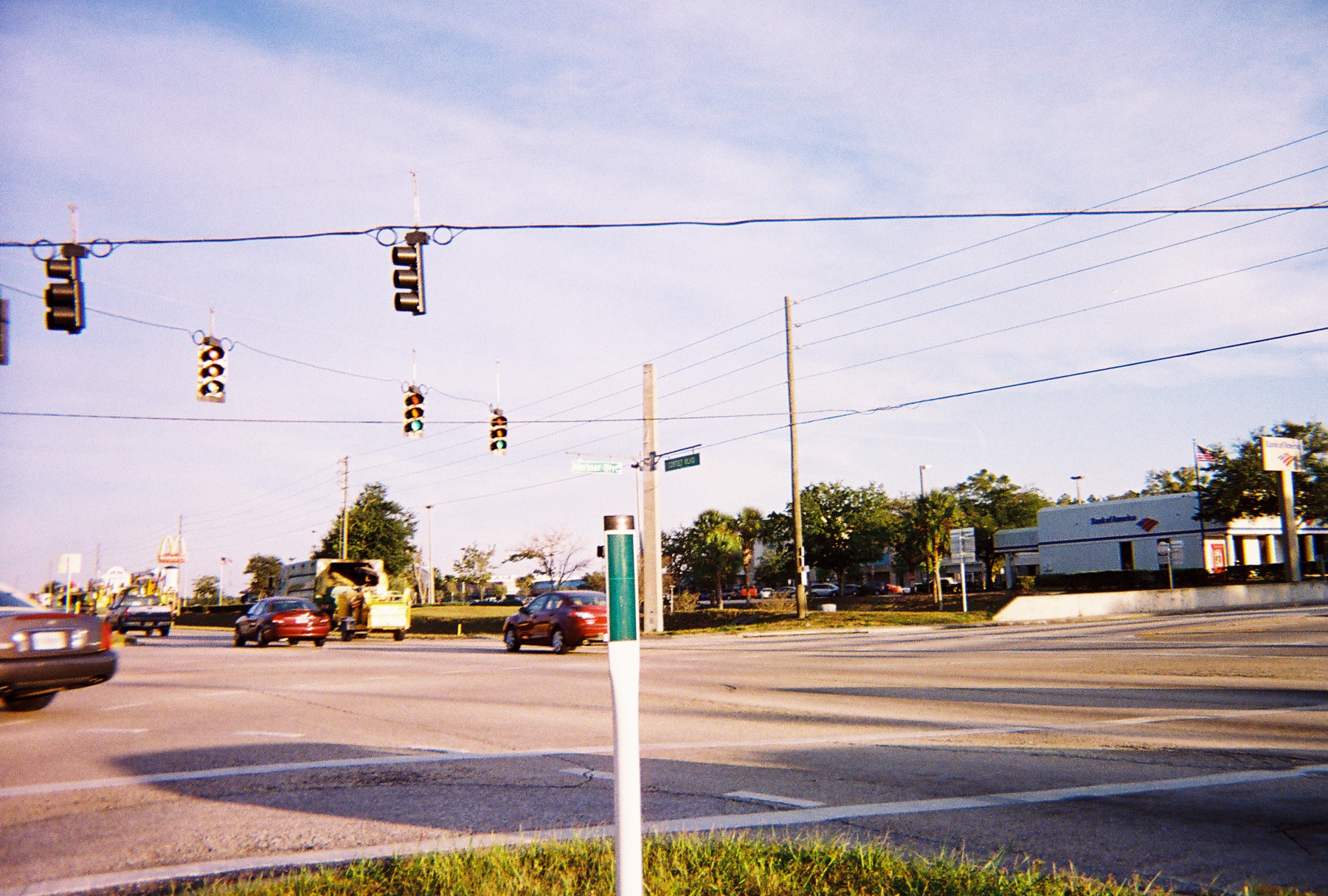
Palm Bay’s modern footprint is the legacy. The streets GDC platted, dozens of subdivisions covering most of west and southwest Palm Bay, are the city’s actual street grid. The lot dimensions, the right-of-way patterns, the arterial spacing, all of it traces to GDC’s 1960s-1970s engineering.
Many of those lots have since been built on, in some cases by the original buyer’s heirs, in some cases by speculators who acquired tax-foreclosed lots from defaulted buyers. Some lots remain vacant, still owned (or owned by descendants of owners) who paid through their installment contracts but never built. Brevard County’s tax rolls include a long list of small, undeveloped GDC-era lots, many with out-of-state mailing addresses for the tax bill.
The buyers who got the rawest deal were those who paid through their contracts in good faith, took title, and then discovered the lot was worth half what they had paid. There is no compensation for that. The Interstate Land Sales Full Disclosure Act was not retroactive. The 1990 criminal case targeted the most egregious practices but did not unwind the millions of legitimate installment contracts. Those buyers, or their estates, simply own the lots they paid for. Whether they ever recouped their investment depended on Palm Bay’s long-term real estate market, which has eventually appreciated to the point where most original lot prices are below current land values, even if the buyer never built anything.
The mail-order land sales era ended. The city it produced is still here.
Further Reading
As an Amazon Associate we earn from qualifying purchases.