Sabal palms and the Palm Bay namesake
The sabal palmetto, Florida's state tree, is the species that gave Palm Bay its 1925 name. The trees lining the western shore of the Indian River south of the Palm Bay Road causeway were the visual reference. They're still there. They live 200-300 years. Some of the same individuals that named the city in 1925 are still standing today.
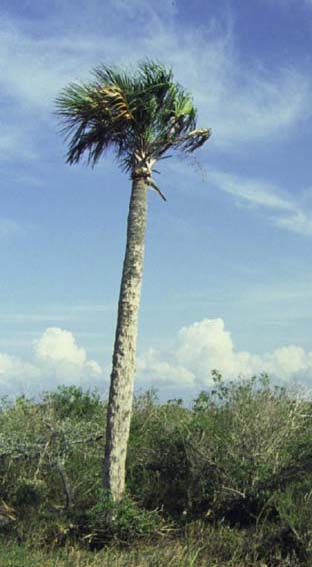
Sabal palmetto is a fan palm, native to the southeastern U.S. coastal plain, Florida’s state tree since 1953 and South Carolina’s state tree since 1939. The species grows from a single underground stem (technically a caudex), reaches 40-60 feet at maturity, lives 200-300 years, and tolerates fire, drought, salt, and the occasional hurricane.
It’s the palm that gave Palm Bay its name. The 1925 renaming petition pointed to the sabal palms lining the western shore of the Indian River Lagoon near the present causeway. Those palms, or their descendants and successors at the same site, are still there.
The species itself
Sabal palmetto belongs to the family Arecaceae. It’s the most northern-distributed of the New World palms, with a natural range extending from southern North Carolina south through Florida and into the Bahamas. The trees thrive in the brackish-to-freshwater transition zones common along the Indian River Lagoon’s western shore.
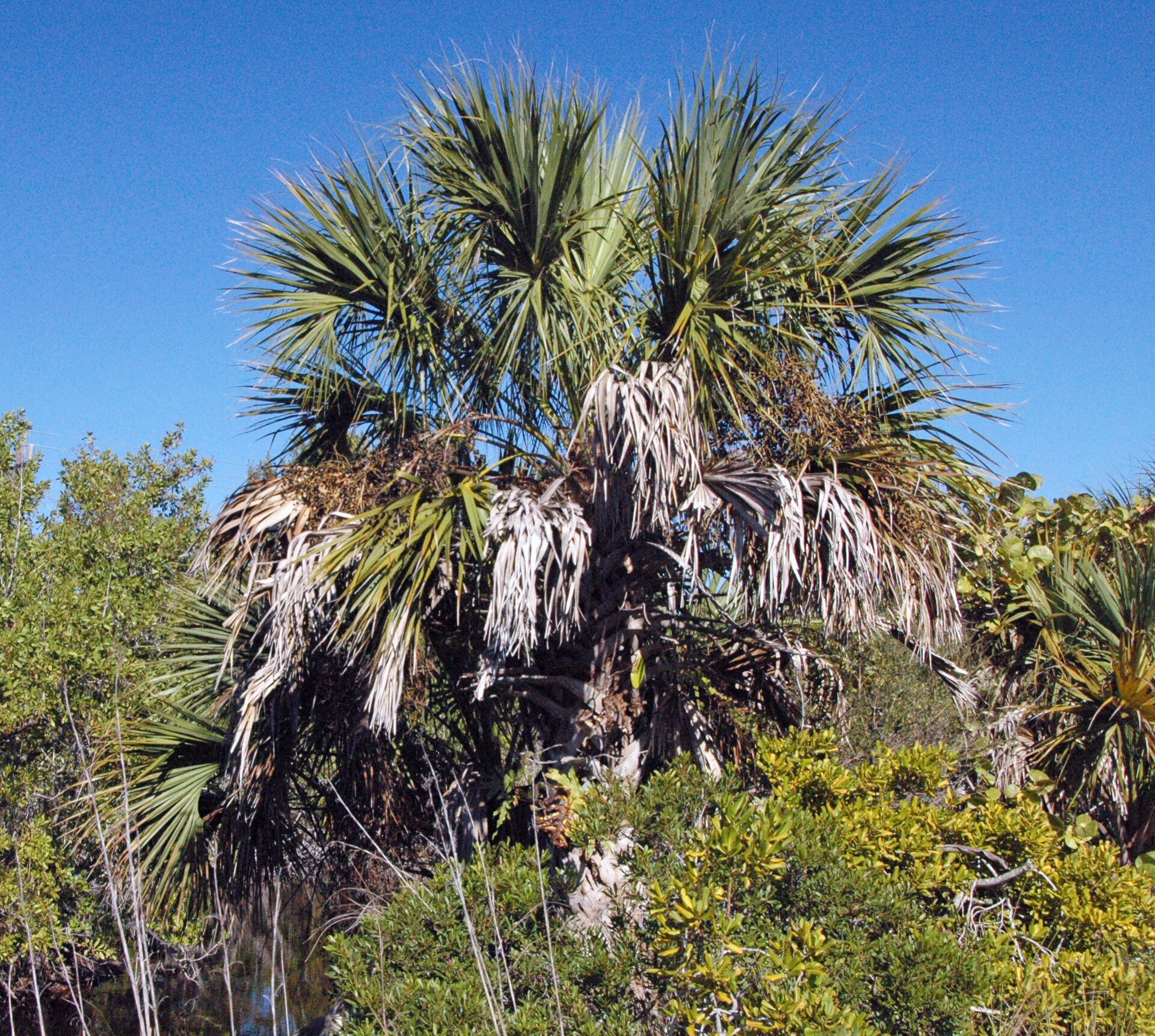
The visual signature is distinctive. A single trunk, often with “shaggy” residual leaf bases (called “boots”) attached, supports a crown of fan-shaped leaves up to 4-5 feet across. The leaves are costapalmate, meaning the leaf-bearing arm extends partly into the leaf blade rather than terminating at the base of the fan. White flowers in summer produce small black fruit by fall. The fruit was a food source for the Ais and for the early settlers; the heart of the palm (the young apical bud) was also harvested for food, a practice that kills the individual tree and is no longer routinely done.
The trees grow slowly. A sabal palm that’s 30 feet tall has been growing for 80-120 years, depending on site conditions. Individuals of 200+ years are not rare. The trees are exceptionally hurricane-resistant; their flexible trunks bend rather than breaking under wind load, and their root systems hold even in saturated soils that would topple shallower-rooted species.
Why Palm Bay used the name
The 1925 renaming petition for Tillman to Palm Bay was, as a marketing exercise, looking for a Florida-evocative name. Sabal palms were the dominant visible palm species along the Indian River shoreline near the village. The “Palm” in “Palm Bay” pointed at that local botanical signature. The “Bay” pointed at the shallow inlet at the mouth of Turkey Creek, which the palms bordered.
The choice was descriptively accurate. A 1925 visitor standing on the river bank would have seen, in fact, palms along a bay. The visual was real, not invented for the brand. This makes Palm Bay’s name more honest than some Florida coastal-area names that referenced features the place didn’t actually have.
The specific palms
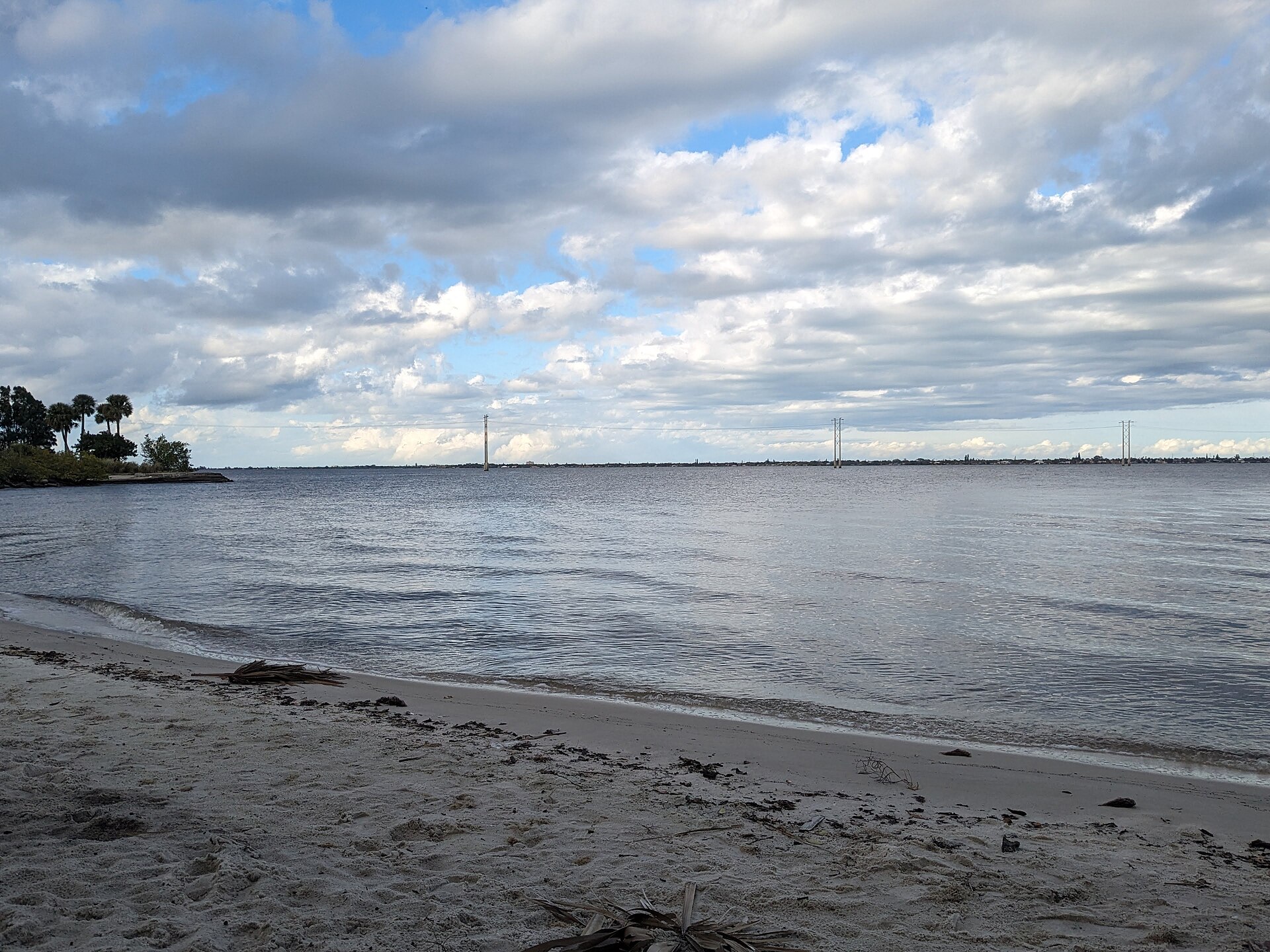
The mile-long stretch of Indian River Lagoon shoreline from approximately the Palm Bay Road causeway south to the Turkey Creek mouth includes hundreds of mature sabal palms. Many of these individuals are old enough to have been standing in 1925. Sabal palms typically reach the height visible from the river at 50-100 years of growth; many of the trees visible today are 150-200 years old.
The palms have not all been preserved. Some have died of age, some have been removed for residential construction along the shoreline, some have been damaged by hurricanes. New growth has replaced some losses, including both naturally-regenerating trees and planted specimens. The current palm presence along the shoreline is not exactly what 1925 visitors saw, but the species and the general pattern are continuous.
The ecological role
Sabal palms anchor the brackish-water shoreline ecosystem. Their root systems stabilize the bank against erosion. Their fronds provide habitat for various bird species (boat-tailed grackles, anhingas, fish crows nest in mature sabal palms). Their fruit supports a range of wildlife including raccoons, opossums, and various bird species. Their dead and dying individuals provide habitat for various insects, fungi, and decomposer organisms.
The species’ fire tolerance is significant. Sabal palms can survive periodic low-intensity fires, which historically swept through Florida’s coastal and pine flatwoods ecosystems on natural cycles. The palms regenerate from their apical buds even when fronds and outer trunk tissue are burned. This made them dominant species in fire-adapted Florida ecosystems before fire suppression became the dominant management practice in the 20th century.
The lagoon-side palms at Palm Bay rarely experience natural fire now. Fire suppression and the absence of natural fuel loads along developed shorelines have effectively removed fire from the local sabal palm population’s environment. The palms have continued to thrive without fire because the species is also drought-tolerant, salt-tolerant, and shade-tolerant; fire was a beneficial regime, not a required one.
The state-tree designation
Sabal palmetto became Florida’s state tree in 1953 through Florida Legislature action. The designation followed South Carolina’s earlier (1939) state-tree designation of the same species. The two states share the species, and both states’ historical and cultural identities have been entwined with sabal palms.
The “palmetto” reference appears on Florida’s state flag, in state-government iconography, and in countless other Florida cultural contexts. The species is so closely identified with the state that it functions as one of the standard visual shorthands for “Florida” in marketing, art, and casual cultural reference.
Palm Bay’s name is a small piece of this broader sabal-palm cultural footprint. The city’s 1925 naming was a local decision, but it slotted into a larger Florida pattern of using the sabal palm as a botanical and visual reference for state and local identity.
The palms today
The current sabal palm presence at Palm Bay includes the original lagoon-shore population plus extensive plantings throughout the city. Sabal palms are widely used in residential and commercial landscaping; they’re hardy, attractive, and require minimal maintenance. The City of Palm Bay plants sabal palms along arterial roads. Builders use them in subdivision landscaping. Homeowners plant them in residential yards.
This means modern Palm Bay has many more sabal palms than the 1925 city did. The original namesake population along the lagoon is a small fraction of the total. The species’ visual presence in the city is, ironically, more dominant now than it was when the city chose its name.
The original lagoon-side palms remain the most ecologically significant individuals. They’re old. They’re growing in natural soil and hydrology conditions. They support the wildlife communities that have used them for centuries. The street-side and landscape-planted sabal palms are valuable but younger, smaller, and growing in modified soil environments.
The 200-year palm
Some of the sabal palms currently growing along the Indian River south of the Palm Bay Road causeway are 200 years old. They were saplings before the U.S. acquired Florida from Spain in 1821. They were mature trees when the Tillman post office opened in 1885. They were established old-growth individuals when the 1925 renaming pointed at them as the basis for the new city name.
These individuals will likely live another 50-100 years. They’ll outlive most current Palm Bay residents. They were here before the city existed in any form, and they’ll be here long after every current resident is gone. The trees are older than the country in administrative form (Florida’s statehood is from 1845). They’re older than the city.
This is the perspective the sabal palms offer. The city’s age is measured in decades. The palms’ age is measured in centuries. The 1925 naming was a brief human episode in the trees’ lifespans. The city is the recent visitor; the palms are the residents.
Further Reading
As an Amazon Associate we earn from qualifying purchases.