Tillman: what Palm Bay was called before 1925
For roughly forty years before it became Palm Bay, the settlement on the western side of the Indian River was called Tillman. The name belonged to a postmaster, lasted from the 1880s through 1925, and outlived the citrus economy that gave the village its first reason to exist.
Palm Bay was called Tillman for about forty years. The settlement got its post office in 1885, kept the name until 1925, then changed it after the federal government and the citrus economy moved on.
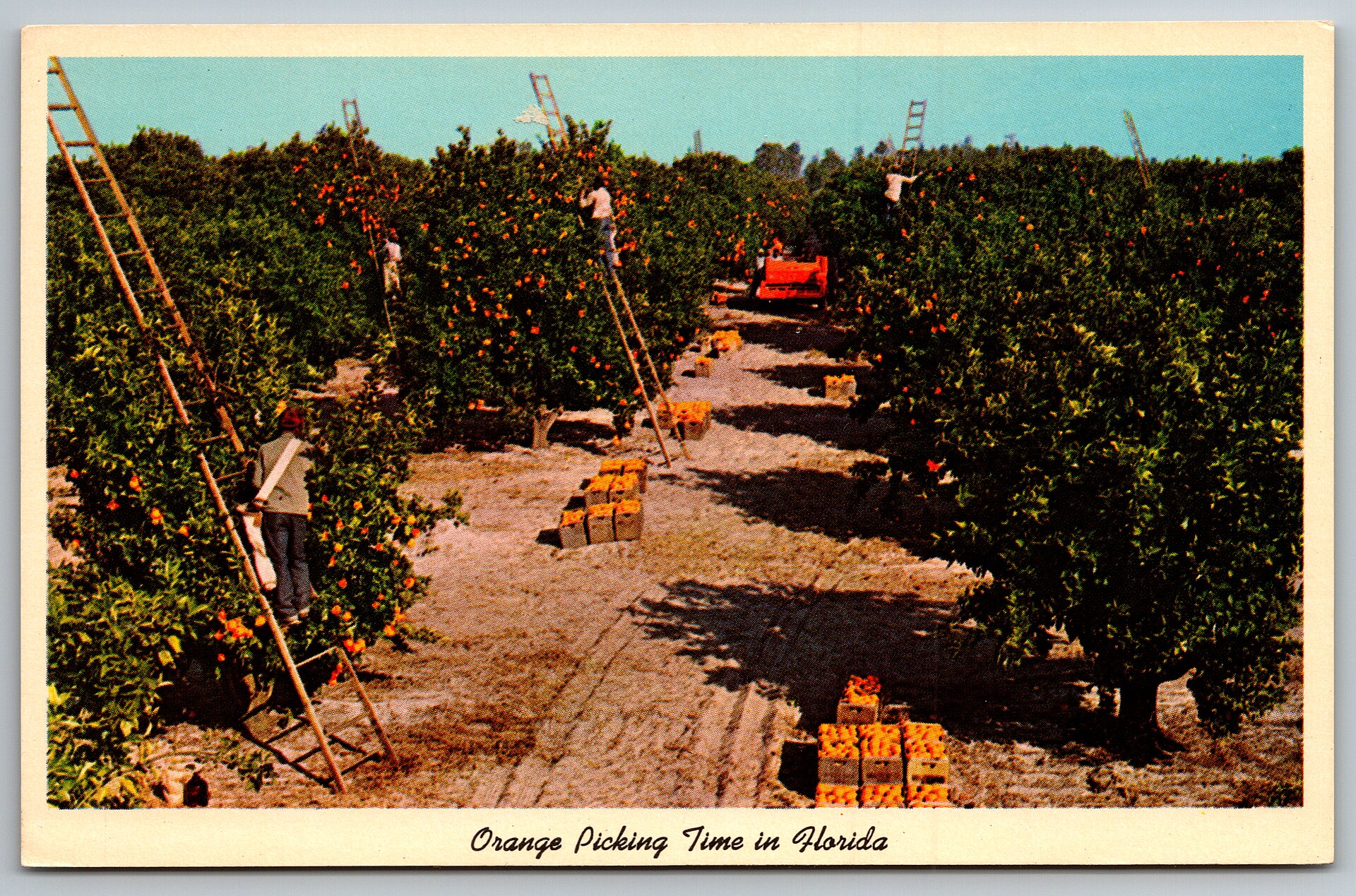
The Indian River side of what’s now Brevard County was thin country in the 1880s. The Florida East Coast Railway hadn’t reached this far south. Settlers came by river. They came for cheap land, frost-tolerant orange groves, and pineapple fields on the sandy ridge that runs parallel to the Atlantic.
Tillman sat on that ridge, on the west bank of the Indian River Lagoon. The bay it later took its name from, the small inlet edged with sabal palms, was a wide spot in the lagoon a mile or so south of the present-day Palm Bay Road causeway.
Where the name came from
The name came from John Tillman, the first prominent European-American settler in the area. Tillman arrived in the late 1870s and built a wharf at the mouth of Turkey Creek, on the west bank of the Indian River. The wharf became a steamboat stop, which made it a fixed point on the river trade. By the late 1880s Tillman was running profitable citrus and banana groves on the north shore of the creek. The banana operation was notable along the Indian River, which had only a handful of growers working that crop at scale.
The post office that opened in 1885 took the settler’s name because that’s how rural Florida naming worked. A merchant or a planter with enough commercial presence applied for a post office. Washington approved it. The applicant became postmaster and got to name the office, usually after himself, his wife, or whatever the place was already called among locals. Tillman had the wharf, the groves, and the steamboat stop. The post office became Tillman because Tillman the settler had built the only thing that looked like a town here.
The Brevard County stretch of the Indian River has several settlements with names from that era: Eau Gallie, Melbourne, Malabar, Valkaria. Most of them stuck. Tillman didn’t.
What the village actually was
Tillman in 1900 had a few dozen families, a school, a Methodist church, and two stores. The Brevard County tax rolls from that period list orange groves, pineapple sheds, and modest frame houses on lots running back from the river.
The Florida East Coast Railway reached Palm Bay (then Tillman) in 1894 as part of Henry Flagler’s push south to Miami. The track ran roughly parallel to U.S. 1’s present alignment, west of the river. A small depot served Tillman. The depot moved freight, mostly fruit, and passengers heading toward Miami or back north to Jacksonville.
By 1910 the population was still under 300. Tillman was a stop, not a destination.
The 1894-95 freezes
The two great freezes of December 1894 and February 1895 killed Florida citrus from the panhandle to roughly the Indian River. Brevard County’s groves got hit hard. Tillman’s didn’t quite escape but were marginally luckier than groves further north, where temperatures dropped below 20°F for hours.
What the freezes did do, across the state, was destroy the small-grower economy. Statewide citrus production fell from about six million boxes a year before the freezes to roughly 100,000 boxes after, and didn’t pass one million boxes again until 1901. After the second freeze a lot of citrus operations consolidated south, into Polk and Highlands counties, where the freeze risk was lower. Tillman kept some groves running but never recovered the pre-1895 momentum.
The settlement’s economy shifted toward subsistence farming, river trade, and a thin tourist trade serving people coming through on the rail line.
The 1925 renaming
By the early 1920s Florida was in the middle of its first land boom. Coastal speculators were laying out subdivisions from Jacksonville to Miami. Tillman’s residents wanted in.
The name didn’t help. Tillman was forgettable, vaguely southern, and meant nothing to the northern buyers the boom needed. The locals petitioned to change it. Palm Bay won. The new name referred to the sabal-palm-bordered cove at the mouth of what’s now Turkey Creek, which any visitor coming up from Melbourne could see from the river.
The post office officially became Palm Bay in 1925. By that point Tillman as a name had been losing currency for a decade. Maps from the late 1920s show Palm Bay, sometimes with Tillman parenthesized as the old name, then Tillman drops off entirely by the mid-1930s.
The 1925 timing was unlucky. The Florida land boom collapsed in 1926 after a hurricane wiped out Miami and the banks tightened. Palm Bay’s renaming happened on the cusp of the bust. The next thirty years were quiet ones. The town stayed under 1,000 people through the 1950 census.
The drainage district that carried the name forward
The name Tillman survived 1925 in one consequential place: the Melbourne-Tillman Drainage District. Organized by local businessmen between 1922 and 1926, the district issued $1.5 million in bonds and dug a grid of 80 canals totaling 180 miles to drain roughly 40,000 acres of flatwoods west of the settlement. The work began under the Tillman name. By the time the canals were finished, the post office had become Palm Bay, but the district’s bond paperwork and operating charter kept Tillman in the name.
The district itself went bankrupt in 1926 after a dredge fire and the September hurricane that broke the broader land boom. Its physical infrastructure stayed in the ground. The operating entity was reorganized later as the Melbourne-Tillman Water Control District, which still manages the canals today. That makes Tillman not just an old town name in a 1920s deed but a current legal entity name on a Florida water-control district that affects how thousands of acres of southern Brevard County drain after every rainstorm.
The drainage grid the Tillman businessmen funded is also the most consequential thing that happened in the village. Without those canals, the inland country General Development Corporation later platted in 1959 would have been unbuildable. The Palm Bay that emerged in the 1960s and 1970s sits on the rights-of-way the Tillman-era district cut decades earlier.
What Tillman’s traces look like today
There is no Tillman Avenue in Palm Bay. There’s no historic marker that we could verify. The old post office building itself, if it survived, has not been identified in any county historical record we could find. The 19th-century settlement’s footprint is mostly under the General Development Corporation’s 1960s street grid.
What remains is the name in older deeds, in a few Florida state archive references, and in the city’s own short history page, which acknowledges Tillman as the predecessor settlement without much elaboration. The original post office records are at the National Archives, classified under “Discontinued Post Offices, Florida, B-T.”
That’s the standard fate of a place that gets renamed mid-boom. The new name takes over so completely that the old one survives only as a footnote in the documents that have to be precise: deeds, postal records, court filings.
Why the timeline matters
The Tillman period is short but it’s the entire pre-modern history of Palm Bay. Everything that happened on this site before 1925 happened in a town called Tillman. The Ais shell middens at Turkey Creek were on Tillman land. The 1894 freeze hit Tillman groves. The railroad came to Tillman first.
Anyone writing about Palm Bay before the 1959 GDC purchase is, technically, writing about Tillman. The city’s own historical materials use “Tillman/Palm Bay” interchangeably for the pre-1925 period. The bureaucratic discontinuity matters for record-finding: census records before 1930 are filed under Tillman, after under Palm Bay. Deed indexes from the 1920s straddle both names.
What got lost
The renaming preserved the place but erased the village. By 1959, when General Development bought what would become modern Palm Bay, the Tillman-era community was already eroded by sixty years of citrus decline, the rail’s bypass of the town as a major stop, and the broader decay of Brevard’s small Indian River settlements.
The Tillman post office got its name from a postmaster nobody remembers. The village got its name from the post office. The city of Palm Bay got its name from a wide spot in the river bordered by trees that are still there, still leaning out over the water on the south side of the causeway. The trees are older than any of the names.
Further Reading
As an Amazon Associate we earn from qualifying purchases.