The Palm Bay High Pirates
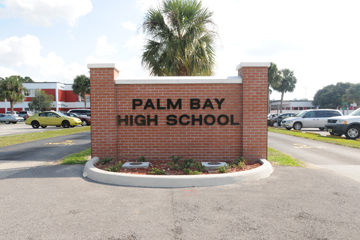
Palm Bay High School opened in 1968 as the city's first high school. The Pirates, in the school's purple-and-gold color scheme, are the longest-running athletic identity in Palm Bay. Football, basketball, baseball, softball, and the other Florida High School Athletic Association sports have anchored civic identity for half a century.
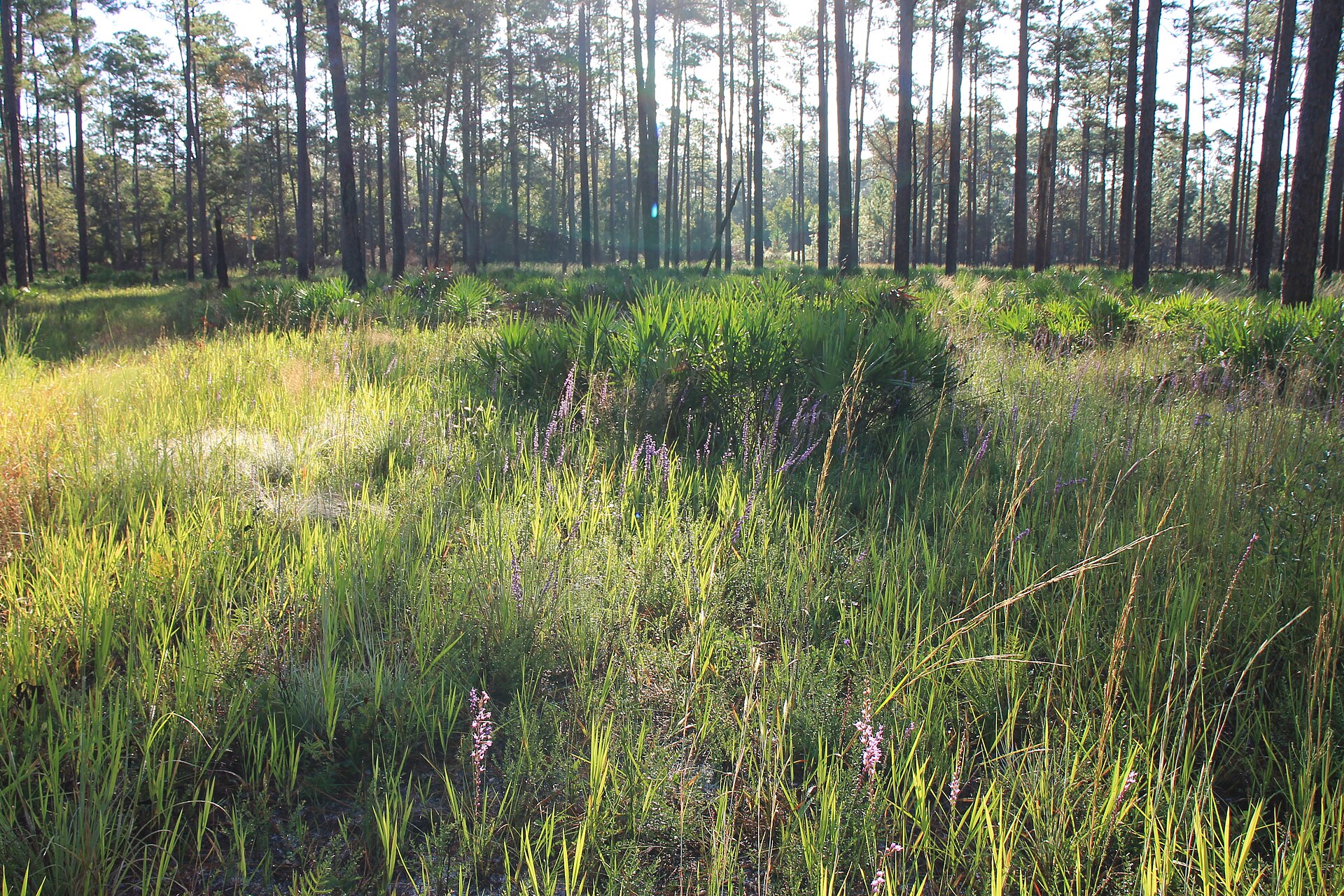
Palm Bay High School opened in 1960 as Southwest Junior High School, on a parcel that’s now addressed at 101 Pirate Lane in Melbourne, just north of the Palm Bay city line. The campus became Palm Bay High over the following years as Brevard County reorganized its secondary schools to absorb the population pressure General Development Corporation’s subdivisions were producing. The Pirates have been the athletic identity throughout. Black, red, and silver colors, pirate iconography, and the standard Florida high school athletic infrastructure: football stadium, gymnasium, baseball and softball fields, track.
The school competes in the Florida High School Athletic Association across the standard varsity sports. Palm Bay High football has been a state-championship program: the Pirates won FHSAA state titles in 2000 and 2002. In 2006 the program installed one of the earliest artificial turf football fields at a Florida high school. The school’s competition footprint covers football, basketball, baseball and softball, soccer, track and field, cross country, golf, swimming, tennis, volleyball, wrestling, and weightlifting.
The football program
Football is, in Florida high school athletics generally and in Palm Bay specifically, the centerpiece program. Pirates football has operated continuously since the school’s earliest fall semesters in the 1960s. The team has competed in various FHSAA classifications as enrollment has changed; in recent years Palm Bay High has been classified in Class 4A under the FHSAA’s enrollment-based system.
The program’s high-water marks were the 2000 and 2002 state championships. Back-to-back-era contention is rare for Brevard County football, and Palm Bay High remains one of the smaller pool of Brevard schools with multiple state football titles. The program also installed an artificial turf field in 2006, one of the early Florida high school adopters of the surface that’s now standard across the state’s competitive programs.
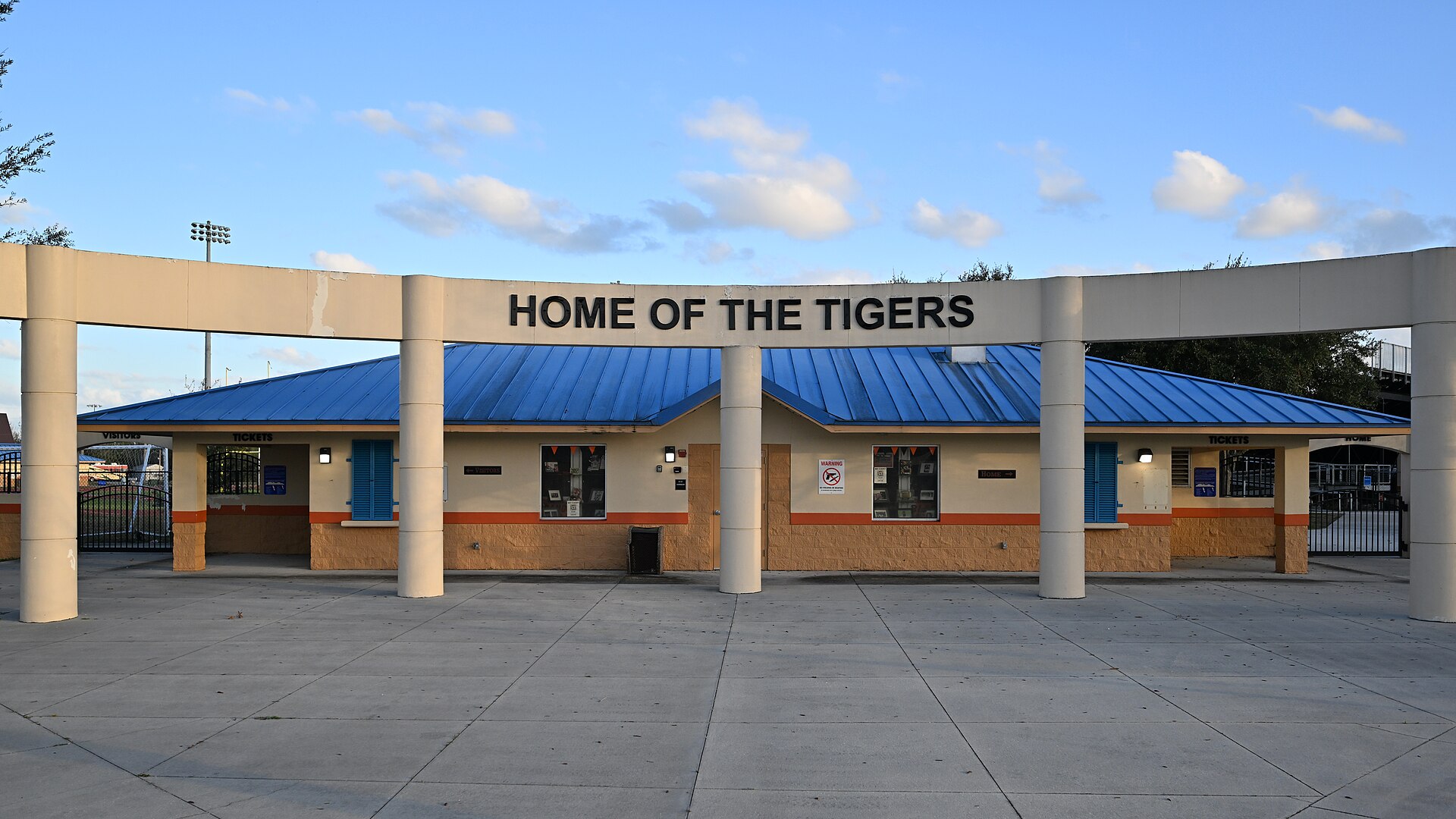
Friday night football, in Palm Bay as across Florida, is a community event. The stadium, the home crowd, the band, the booster operation, all run on the standard pattern. Attendance varies by season and by opponent; rivalry games, particularly against neighboring schools Bayside High and Heritage High, draw the biggest crowds.
Basketball
The Pirates basketball program has run continuously alongside football. Boys and girls varsity teams compete in the FHSAA winter season. The basketball program has produced district championships and individual standouts but has not been a sustained state-tournament presence in either gender.
Florida high school basketball is competitive at the larger-classification level, with Miami-area, Orlando-area, and Tampa-area schools dominating the upper classifications. Palm Bay’s basketball record is reflective of being a mid-tier Brevard County program in a state where the basketball talent concentrates in the major metro areas.
Baseball and softball
Florida high school baseball is one of the strongest state-level baseball programs in the country, producing more MLB draftees per capita than most other states. Palm Bay High’s baseball program participates in this ecosystem, with the standard Florida high school spring baseball schedule and the development pipeline to college and pro baseball.
Palm Bay High baseball has produced players who went on to college rosters; a few have been drafted by MLB clubs. Softball, the spring sport for girls equivalent to baseball, follows the same general pattern.
The baseball and softball facilities at Palm Bay High are typical of Brevard County high schools: dirt infields, grass outfields, dugouts and bleachers, lighting for night games on the baseball field.
Other sports
The Pirates program also includes the standard FHSAA sports: track and field (boys and girls), cross country, golf, swimming and diving, soccer (boys and girls), volleyball (girls), tennis, wrestling, and weightlifting (boys and girls under more recent FHSAA classifications). The school also competes in academic and athletic events outside formal FHSAA sponsorship.
Track and field has produced more state-meet qualifiers and All-State performers than most other Palm Bay sports, on a per-year basis. Florida high school track is competitive but the depth of competition is somewhat lower than football and basketball, making individual standouts somewhat more visible at the state level.
Rivalries
The Pirates’ principal local rivalry is with Bayside High School, which opened in August 1998 on Degroodt Road as the first new high school built in the Brevard County School District in more than 25 years. The two schools draw students from adjacent zones in Palm Bay, and the football and basketball games between them have generated routine attendance and local press attention.
Heritage High, opened August 10, 2009, is a secondary rivalry. Earlier in Palm Bay High’s history, the principal cross-city rivalry was with Melbourne High in Eau Gallie, since Melbourne was the nearest substantial high school north of Palm Bay. The Melbourne-Palm Bay football matchup has had years of stronger and weaker emphasis depending on the relative team strengths in any given season.
Notable alumni
The school’s notable alumni list, like most public high schools’, is a mix of locally-prominent figures, college and minor-league athletes, military service members, and accomplished professionals across various fields. The school has not produced a long list of household-name celebrities, which is typical for a public high school of Palm Bay’s size and demographics.
Facilities
Palm Bay High’s campus on Jupiter Boulevard occupies a substantial parcel with athletic fields, a football stadium, a separate track and field facility, a baseball stadium, softball field, gymnasium with multiple courts, tennis courts, and the academic and administrative buildings.
The facilities have been renovated and expanded across the school’s nearly 60 years of operation. The original 1968 construction has been largely replaced or significantly modified through capital projects funded by various Brevard County School District bond measures and the 2014 half-cent sales tax. Current facilities are adequate for the school’s competition level; they’re not the top-tier modern facilities found at some newer Florida high schools but they’re functional.
What the Pirates mean civically
Palm Bay High’s athletic teams are, for many residents, the principal piece of organized civic identity Palm Bay produces. The city does not have a professional sports team. The city’s cultural institutions are modest. The local newspaper coverage is limited. The Pirates’ Friday night football game, year after year, is one of the largest regular events in the city’s civic life.
This is not a Palm Bay-specific phenomenon. High school athletics serves the same civic-identity function across most of Florida and across most American suburbs. What is specific to Palm Bay is the relatively small number of competing civic institutions; the Pirates carry more relative weight in the city’s identity than would be true in a city with a more developed civic infrastructure.
A graduate of Palm Bay High in 1972 and a graduate in 2022 share, across half a century, the same school colors, the same mascot, and a substantial overlap of athletic memory. That continuity matters in a city that’s otherwise been almost entirely rebuilt in the same period. The Pirates are one of the few continuous civic threads from incorporation-era Palm Bay through the GDC era through the modern era.
The football team will play on Friday nights this fall. The baseball team will play in spring. The basketball team will play in winter. The school will graduate another class. None of it will make state headlines. All of it will keep the Pirates identity intact for another year.
The 2014 magnet conversion
In the 2014-2015 school year, the campus was rechartered as Palm Bay Magnet High School. The reorganization brought in STEAM-based academies funded by federal grants, including a law and forensics academy, a Marine Corps Junior ROTC unit, and the PiraTech robotics program that competes in FIRST Robotics events. Current enrollment runs around 1,486 students with a student-to-teacher ratio close to 21:1.
The magnet status didn’t dissolve the Pirates identity. It layered an academic specialization on top of a school that had been running as Palm Bay’s neighborhood high school for half a century. The athletic teams kept the Pirate mascot, the black-red-silver colors, and the existing rivalries. What changed was the student mix: the magnet pulls applicants from elsewhere in Brevard, which broadens the student body while shrinking the strictly local zone.
For the athletic program this has been a mixed shift. Magnet students typically enter with stronger academic profiles but no special athletic recruiting boost. The Pirates’ competitive footprint, mid-tier Class 4A program with occasional state-title runs in football, has stayed roughly stable since the magnet conversion. The 2000 and 2002 football titles predate the magnet era; nothing comparable has happened since, which mirrors the broader pattern at many Florida high schools that converted to magnet status.
Further Reading
As an Amazon Associate we earn from qualifying purchases.